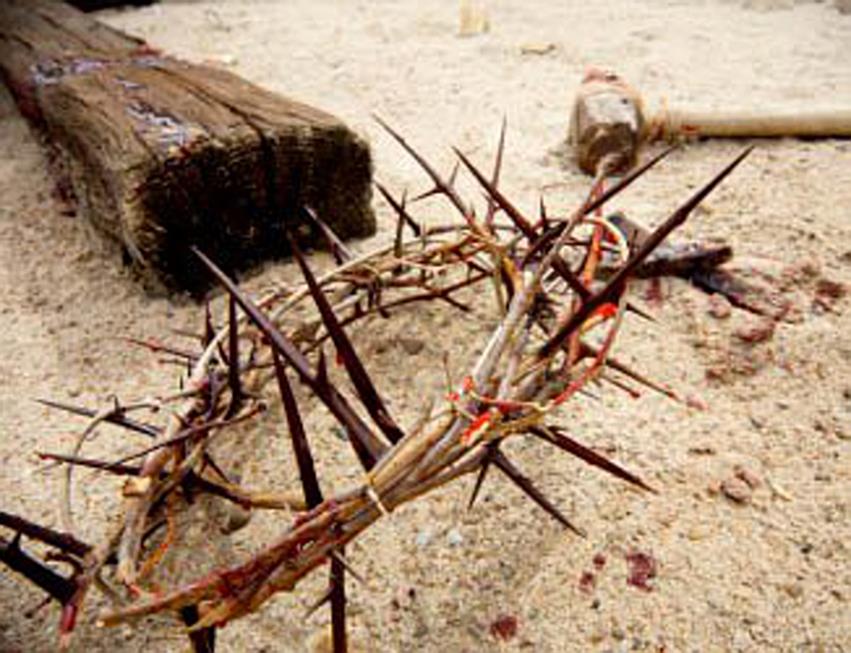
While I've been sick I've had a lot of time to think. There wasn't much else I could do. And one of the things my mind kept returning to is the idea of Should Sharks. At first I could feel them swimming about in my head waiting to bite, but happily I kept them at bay. Something I haven't been able to always do in the past and to see my own progress made me happy. It takes time to learn to use the Truth Tools and to make them work for us, so I'm celebrating the victory.
But there was something more. One of the most insidious things Should Sharks inflict upon us is when our desires are righteous. In those times the Should Sharks often bite and bite hard. But as I lay in my bed thinking about all the prophets and about Jesus Christ I was amazed at how everyone of them could have been completely eaten alive by Should Sharks, but one of the marks of a prophet and the Savior is they never let Should Sharks bite even when the most righteous intentions go wrong.
Those who never marry, those who wish with all their hearts for children but can't conceive, those trying valiantly to raise righteous children who won't listen, those doing all in their power to preserve a faltering marriage will experience swarms of Should Sharks. After all, we should be able to marry, to have children, to raise righteous children, to make our marriages work, shouldn't we? BUT, and this is a very big BUT, we live in a telestial world and there are no guarantees in a telestial world.
For some reason suffering is necessary in a telestial world and the lives of prophets and the Savior testify to that. Joseph and Emma shouldn't have lost five of their children. Friends shouldn't have betrayed Joseph. Joseph shouldn't have been killed by mobs, and we could go on and on about the Should Sharks in Joseph's life and every single other prophet.More than that, Jesus Christ shouldn't have been betrayed by one of His disciples. His friends shouldn't have fallen asleep when he asked them to wait for Him in the garden. And especially, Jesus Christ shouldn't have had to suffer for my sins.
The big danger with these kinds of Should Sharks is that along with the vexing thought that what is happening shouldn't be happening, we usually begin to feel unworthy, unloved, and forgotten by God. But the simple fact that we have been called upon to suffer for very righteous reasons has absolutely no bearing upon how much God loves us. God loves the childless, the unmarried, the struggling parent, the hurting spouse and that love should never be doubted. The fact that we suffer is not an indication of God's love. Instead we should remember that we are loved and that our suffering puts us in the same category as all the saints, prophets, and although not nearly to the same degree, it makes us more like Jesus Christ.
Showing posts with label shoulds and shouldn'ts. Show all posts
Wednesday, February 13, 2013
Monday, January 14, 2013
Avoid the Should Sharks
As in all things Jesus Christ is our example. He shows us how to Live in Truth and in many instances His example is so profound it brings me to my tears. One of those experiences occurs the night the Savior was taken from the Garden of Gethsemane and tried for being the Son of God.
Living in Truth means that we deal with the Truth or verity of what confronts us and not with what we think should be happening or what should not be happening. Trying to deal with what should be is like boxing with an invisible opponent. You can swing, curse, kick, jab, and punch, but you are never going to hit anything.
So what has this to do with the night the Savior was tried? That night the Lord went to the Garden to pray and asked three of His closest friends and associates, Peter, James, and John, to watch with Him. Then he walked away, knelt, and prayed. When He returned to His friends instead of watching, they had fallen asleep. Shortly after that a mob of hundreds of soldiers and other men approached and another friend, one of His apostles, betrayed Him with, of all things, a kiss. About this time most of us would have been deep in the Pit of Illusion with thoughts such as, "Peter, James, and John shouldn't be asleep. They should have done what I asked. They are supposed to be helping me." And later, "Judas shouldn't betray me. He's supposed to support and help me. And especially he shouldn't betray me with a token of affection." And beyond that, "These men shouldn't be accusing me of crimes I didn't commit. Here I am trying to save their eternal lives and they want me dead! They shouldn't be doing this."
If at any time in the history of mankind, should and shouldn't thinking was warranted it was that night. But Jesus never sank into the Pit of Illusion with this kind of thinking. Instead He stayed with the reality or verity of what was happening, and dealt with the Truth. And what is happening? Peter in an impetuous attempt to defend the Savior has cut off the ear of a servant of the High Priest. Not burdened by what should be or what should not be, not worried about Himself or what is about to happen, the Savior sees the need of another and reaches out and compassionately heals the man.

The reason we fall into the Pit of Illusion is because we let what I call the Should Sharks take over our lives. The Savior never did that. He always Lived in Truth. He dealt with verity--the Truth. Likewise we eliminate a great deal of pain--all the Unnecessary Pain--from our lives when we stop letting the Should Sharks prey on us and instead deal with the simple Truth.
Living in Truth means that we deal with the Truth or verity of what confronts us and not with what we think should be happening or what should not be happening. Trying to deal with what should be is like boxing with an invisible opponent. You can swing, curse, kick, jab, and punch, but you are never going to hit anything.
So what has this to do with the night the Savior was tried? That night the Lord went to the Garden to pray and asked three of His closest friends and associates, Peter, James, and John, to watch with Him. Then he walked away, knelt, and prayed. When He returned to His friends instead of watching, they had fallen asleep. Shortly after that a mob of hundreds of soldiers and other men approached and another friend, one of His apostles, betrayed Him with, of all things, a kiss. About this time most of us would have been deep in the Pit of Illusion with thoughts such as, "Peter, James, and John shouldn't be asleep. They should have done what I asked. They are supposed to be helping me." And later, "Judas shouldn't betray me. He's supposed to support and help me. And especially he shouldn't betray me with a token of affection." And beyond that, "These men shouldn't be accusing me of crimes I didn't commit. Here I am trying to save their eternal lives and they want me dead! They shouldn't be doing this."
If at any time in the history of mankind, should and shouldn't thinking was warranted it was that night. But Jesus never sank into the Pit of Illusion with this kind of thinking. Instead He stayed with the reality or verity of what was happening, and dealt with the Truth. And what is happening? Peter in an impetuous attempt to defend the Savior has cut off the ear of a servant of the High Priest. Not burdened by what should be or what should not be, not worried about Himself or what is about to happen, the Savior sees the need of another and reaches out and compassionately heals the man.

The reason we fall into the Pit of Illusion is because we let what I call the Should Sharks take over our lives. The Savior never did that. He always Lived in Truth. He dealt with verity--the Truth. Likewise we eliminate a great deal of pain--all the Unnecessary Pain--from our lives when we stop letting the Should Sharks prey on us and instead deal with the simple Truth.
Albert Einstein once said,
"A man should look for what is,
and not for what he thinks should be"
That is great advice.
Wednesday, November 28, 2012
Should Sharks and Christmas
I've been reading the gospels of the New Testament in preparation for Christmas and my heart is full to overflowing. On every page the Savior teaches me more about what it means to Live in Truth, and the reality of what His birth means to me sinks deeper into my soul.
This time through I've been amazed once more at how the Savior never lets the Should Sharks prey on Him.
The best example of this is the night of his trial. Peter, James and John should have stayed awake and watched over Him. Judas shouldn’t have betrayed Him especially with a token of affection such as a kiss. Soldiers shouldn’t have arrested Him when He had not committed any crime. But those Should Sharks, never concerned Jesus. Instead of being vexed with illusion which always turns us inward and fills us with self-pity, Jesus dealt with the verity of each moment, and continued to turn outward and serve others by restoring Malchus’s ear after Peter had cut it off.
I have put up my tree, but I haven't shopped for gifts or t started baking, but my heart is fulll of Christmas.
This time through I've been amazed once more at how the Savior never lets the Should Sharks prey on Him.
The best example of this is the night of his trial. Peter, James and John should have stayed awake and watched over Him. Judas shouldn’t have betrayed Him especially with a token of affection such as a kiss. Soldiers shouldn’t have arrested Him when He had not committed any crime. But those Should Sharks, never concerned Jesus. Instead of being vexed with illusion which always turns us inward and fills us with self-pity, Jesus dealt with the verity of each moment, and continued to turn outward and serve others by restoring Malchus’s ear after Peter had cut it off.
I have put up my tree, but I haven't shopped for gifts or t started baking, but my heart is fulll of Christmas.
Friday, June 29, 2012
Watch Out For "Should Sharks"
Yes, watch out for the "Should Sharks"!
One of the adversaries greatest tricks that pushes us into the Pit of Illusion is to send "shoulds" to prey upon us like circling sharks whenever we experience adversity. These "Should Sharks" don't bite physically, instead they stab the idea into your head that, “This shouldn’t be happening to you. You keep the commandments and are doing everything you should be doing. You shouldn’t be experiencing this!” This thought is often followed by a thought about the guy down the street who shouldn't be so blessed because he water skis on Sundays and doesn’t pay tithing so he can afford a boat.
But I’ve searched the scriptures, and no place can I find anything that promises that if you keep the commandments you will have no problems--no trials, no adversity. Instead I found a wonderful parable of a man who built his house without a solid foundation and when the flood came the house was washed away. Jesus compared this compared this to a man who built his house upon a solid foundation of rock and when theflood came his house stood firm.(see Luke 6:48-49.)
Notice that the devastating flood deluges both homes, but the home built upon a solid foundation of obedience and gospel principles withstands the storm while the home on the sandy foundation of pride and selfishness crumbles when the waters roar by.
Life with all its ups and downs happens. After all, ups and downs are what mortal life is all about. Gospel living isn’t a preventative measure that keeps life from happening; gospel living is insurance that we will endure despite the floods and down times.
Friday, September 16, 2011
The Grinches Who Appeared In September
I have a favorite quote from Henry David Thoreau that I think of often: “If a man does not keep pace with his companions, perhaps it is because he hears a different drummer. Let him step to the music he hears, however measured or far away.”
Daily I see students who “hear a different drummer.” Yesterday I passed a young man wearing green pajama bottoms splattered with a chaotic pattern of large Grinch faces in Santa hats grinning impishly at whoever would look. Even at Christmas time it would have been unusual apparel, but in September it could seem decidedly out of place. But then who am I to determine what is in place and what isn’t?
The young man is obviously marching to a different drummer than I am, but instead of being annoyed or thinking “he shouldn’t” dress that way I smiled back at all those Grinches and enjoyed the moment. To be honest, my day was brightened by his courage and I’ve been smiling about it ever since.
Daily I see students who “hear a different drummer.” Yesterday I passed a young man wearing green pajama bottoms splattered with a chaotic pattern of large Grinch faces in Santa hats grinning impishly at whoever would look. Even at Christmas time it would have been unusual apparel, but in September it could seem decidedly out of place. But then who am I to determine what is in place and what isn’t? The young man is obviously marching to a different drummer than I am, but instead of being annoyed or thinking “he shouldn’t” dress that way I smiled back at all those Grinches and enjoyed the moment. To be honest, my day was brightened by his courage and I’ve been smiling about it ever since.
Tuesday, September 29, 2009
Living Dexterously
Nearly 2,000 years ago Epictetus, a former slave turned philosopher, said, “It is my business to manage carefully and dexterously whatever happens.” Now that is a philosopher worth listening to. On a practical level, what that means is that when the milk spills instead of falling into the dark Pit of Illusion, simply ask, “How can I dexterously deal with this spilled milk?” Of course, to do that we first need to know what dexterous means. A close synonym is the word clever, and it means “showing skill, cleverness, or resourcefulness.”The beauty of this approach is that as you approach the spill you find yourself excited about the challenge rather than whining from deep in the Pit something like, “Poor me! I’m a scullery maid who has to clean up everyone’s messes!”
With the mentally dexterous mind-set that Epictetus advises, you approach the spill in your most sophisticated Sherlock Holmes manner. “Let’s see,” you say to yourself. “How can I have the most fun with what has happened?” And then you look for possibilities like Sherlock looked for clues. You could bring in a few cats to lick it up. You and the children would have fun watching. You could make a game out of it—set a stop watch and see how fast you can clean it up, or give everyone a rag and a bowl and see who can mop up the most milk and squeeze it into their bowl. You could play in the milk for awhile—take off your shoes and squish the milk between your toes. You could float a rubber ducky on the puddle. You could splash in it. You could sing as you mop it up letting the sound of swish and drip be percussion to your song.
Remember Living in Truth is all about dealing with what is. While pouring the milk, it is fine to admonish yourself, “I should be careful and not spill the milk.” But if a mistake happens and the milk spills, the simple Truth is that it is spilled. That’s what you now have to deal with. No amount of “I should have been more careful,” or “What a waste” or “I am so stupid” or “Why did I do that?” or any other negative thought is going to undo what has been done. All you do with those thoughts is make yourself miserable; you create unnecessary pain. But if you manage the situation dexterously, you can have a lot of fun. You create joy in the present moment and that joy feeds your soul with sheer delight.
Monday, September 28, 2009
Staying Out of the Pit
Nephi is recounting the death of his beloved father and the anger and resentment of his brothers. As he records these things you can tell they have pierced his heart and he begins to think about all the things he should or shouldn’t have done and falls into the painful Pit of Illusion. He says of this, “my heart sorroweth because of my flesh; my soul grieveth because of mine iniquities . . . my heart groaneth because of my sins.” While Nephi doesn’t use the words should or shouldn’t, he is obviously thinking them. He shouldn’t have been weak, he shouldn’t have iniquities and sins. But the truth is we all do, and while it is good to feel the pain and hurt for those things until we repent, after repenting we need to trust in the Atonement and move on. And that’s exactly what Nephi does. At this point he reminds himself that he has trusted in God (4:19), which means that despite his sins and mistakes Jesus Christ will heal and help him.
But as he reminds himself of all the Savior has done for him, he again begins to think about his failings and this time he says, “Why should I yield to sin . . . why should I give way to temptations . . . why am I angry?” (4:27). Again Nephi realizes that this type of thinking is sin itself and immediately commands himself, “Awake, my soul! No longer droop in sin.” Then to counter this negative thinking, he commands himself, “Rejoice, O my heart, and give place no more for the enemy of my soul” (4:28).
Most of us realize we shouldn’t criticize others. But once we have done something wrong, we need to repent and move on and not criticize ourselves. Like Nephi when we are tempted with negative thinking concerning our own behavior that we have repented of, we need to turn our thoughts to Jesus Christ and rejoice that there is someone who can erase our sins. If we instead constantly wallow in the fact that we are sinners, we add more sin, cause ourselves unnecessary pain, and deny the Atonement of Jesus Christ. So rejoice! The Savior lives and we need to shout out with joy, “Behold, my voice shall forever ascend up unto thee, my rock and mine everlasting God” (4:35).
Tuesday, September 22, 2009
The Lavender Fence
I was driving down the street one day with a woman who suddenly and very vehemently declared, “I can’t stand that woman’s lavender fence. If she doesn’t paint it, I’m going to get some white paint and come do it myself.” The remark and the intensity of the remark startled me. Her blood pressure must have risen ten points! And why? Because she thought someone else’s fence should be a different color than it was.I’ve thought about that experience a lot since that day. The fence was an unusual color, but the yard was very tidy and well cared for with lots of flowers in many different colors and varieties. It was obvious the owner liked whimsical decorations and lots of color and would have been very unhappy in an earth-tone, Pottery Barn home like she had. So why was this woman causing herself so much distress? Why did it matter what color this fence was? It was blocks from her own home. She didn’t even have to look at it very often. As a matter of fact, if she looked the other way when she went down the street, she wouldn’t see it at all.
I don’t know what caused the extreme negative emotion. It could have been that she felt her standard of decorating was the only acceptable one—that’s called pride. Or maybe she just didn’t like lavender—that’s called intolerance. Or maybe she felt like everyone should be and like what she was and liked—that’s called selfishness. But the net result of any of this is that it causes pain—unnecessary pain. Instead of stressing over what other people should or should not be doing, life is so much easier if we just enjoy. While I’ll probably never paint a fence around my own home lavender, I can delight in the splash of color and obvious enjoyment the owner of the lavender fence takes in making her yard colorful.
While we are free to choose our own style and surround ourselves with what we like best, I think one of our tasks in life is to learn to enjoy, at least in the moment we behold it, what others enjoy.
Friday, September 18, 2009
Don't Fret--Live in Truth!
When we live in Truth, we live with what is and what was and what will be (D&C 93:24). Consciously being aware of what that means in our lives can make all the difference in a happy life and a miserable one. Those of us raised with Christian values believe in virtues such as honesty, love, modesty, temperance, and patience. We grow up thinking these and other virtues are what should be. But right now, in this telestial world, what is doesn’t always coincide with what should be. Confusing the two is a mistake we make that causes us unnecessary pain. Living in Truth isn’t about living with what should be. (How can you even do that?) Living in Truth is about living with what is.When we live in Truth we accept that what is, is—war, pain, abuse, death, sickness, terrorism, robbery are part of a telestial reality. When we stress about them by fearing or thinking they shouldn’t be, we only create unnecessary pain for ourselves. Yes, we should do all we can to stop evil and bring about good, but we shouldn’t stress or fret about negative things we encounter in life. That only causes us pain—unnecessary pain. Instead we cling to hope by doing the best we can with what is all the while realizing that what will be in the future is going to be much better.
When we find ourselves thinking, “She shouldn’t have said that” or “This shouldn’t have happened” or “He should have done this” we know we are not Living in Truth and there will be pain. Living in Truth means accepting the verity of a situation and living within that verity—living in peace. When you fight against truth, you always lose!
Wednesday, February 25, 2009
"Do Not Anger Again"
Nephi’s Psalm found in 2 Ne 4:29-35, begins with a lament over Nephi’s failings and shortcomings. Nephi knows so much, has seen angels, seen visions, been taught by the Lord and yet he still makes mistakes. Obviously this is bothering him, but the Psalm ends with a command to himself: “Do not anger again because of mine enemies.”I’ve been thinking a lot about anger lately and how it disrupts our lives. The dictionary defines anger as, “a strong feeling of displeasure and usually of antagonism.” This displeasure can range from mild irritation to rage, but it is all anger and is harmful. What the definition doesn’t begin to capture is the damage anger can do to relationships or our health and happiness. Recent studies show that besides causing stress anger can trigger heart attacks and death!
The more I pondered on this the more I realized that if we want to overcome anger in our lives we need to understand what causes the displeasure and antagonism. Surprisingly, the answer to that is simple. Anger occurs when something violates our conviction of what should be. When people think someone should be home at a certain time and they don’t show up, the person gets angry. When a driver cuts in front of a person and the person thinks the driver shouldn’t, they get angry. The list could go on, but anytime we think something should or should not be the way it is, it generates anger. The important thing to realize is we don’t have to become angry. Because we have agency, we can choose to accept what has happened without thinking it shouldn’t have happened. Thus we avoid anger. If we’ve been in the habit of letting anger flare in us, it may be difficult to change, but we can change if we want to.
Nephi seems to be at a point in his life where anger with himself, family, or friends is no longer a problem. But he realizes that nothing good can come from being angry even with his enemies. Whatever point we are at, we too can overcome anger and thereby make our lives happier. As the Old Testament preacher says, “Be not hasty in thy spirit to be angry: for anger resteth in the bosom of fools” (Eccl 7:9).
picture: http://www.ineedmotivation.com
Subscribe to:
Posts (Atom)